Car Rental Websites
10 min read
Car Rental Management Software in the UAE
What UAE rental operators need from fleet software — Salik, traffic fines, contracts and multi-branch — and the point where building beats buying.
By NxFold
Updated 7 Sept 2026

Almost every rental operator in the UAE starts on spreadsheets, and almost all of them are right to. A shared sheet handles availability perfectly well for a dozen cars. The problem is that it keeps appearing to work long after it has stopped — usually until a traffic fine arrives that nobody can attribute to a renter, or a deposit is refunded on a car that still had an outstanding Salik balance.
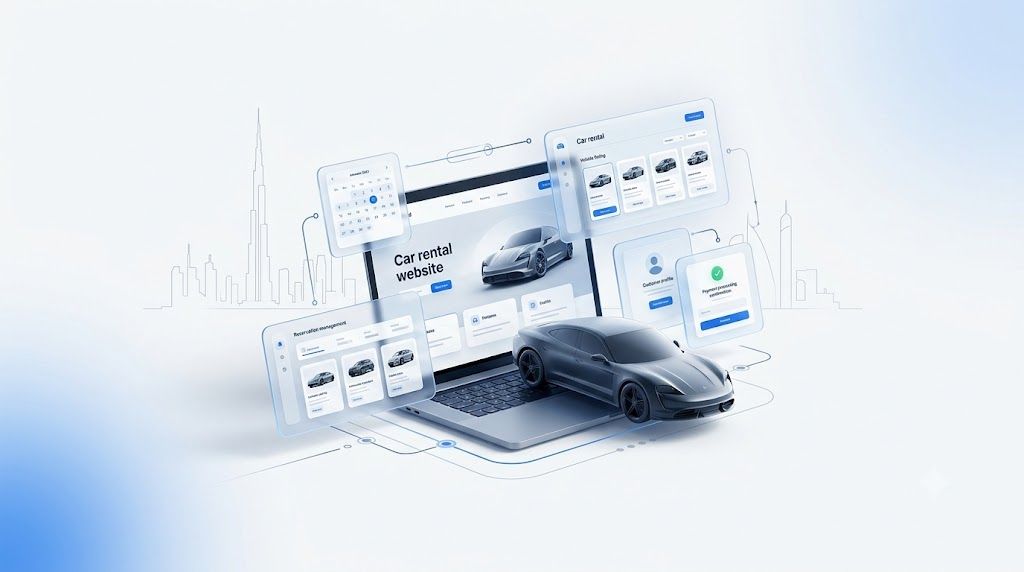
That is the moment operators start looking at software, and it is worth being clear about what they are actually looking for. This guide is about the back office — the system that holds the car, the contract and the money. It is deliberately separate from car rental website development in Dubai, which covers the customer-facing site that sells and takes the reservation. Most operators eventually need both, and they are different products.
The Short Answer
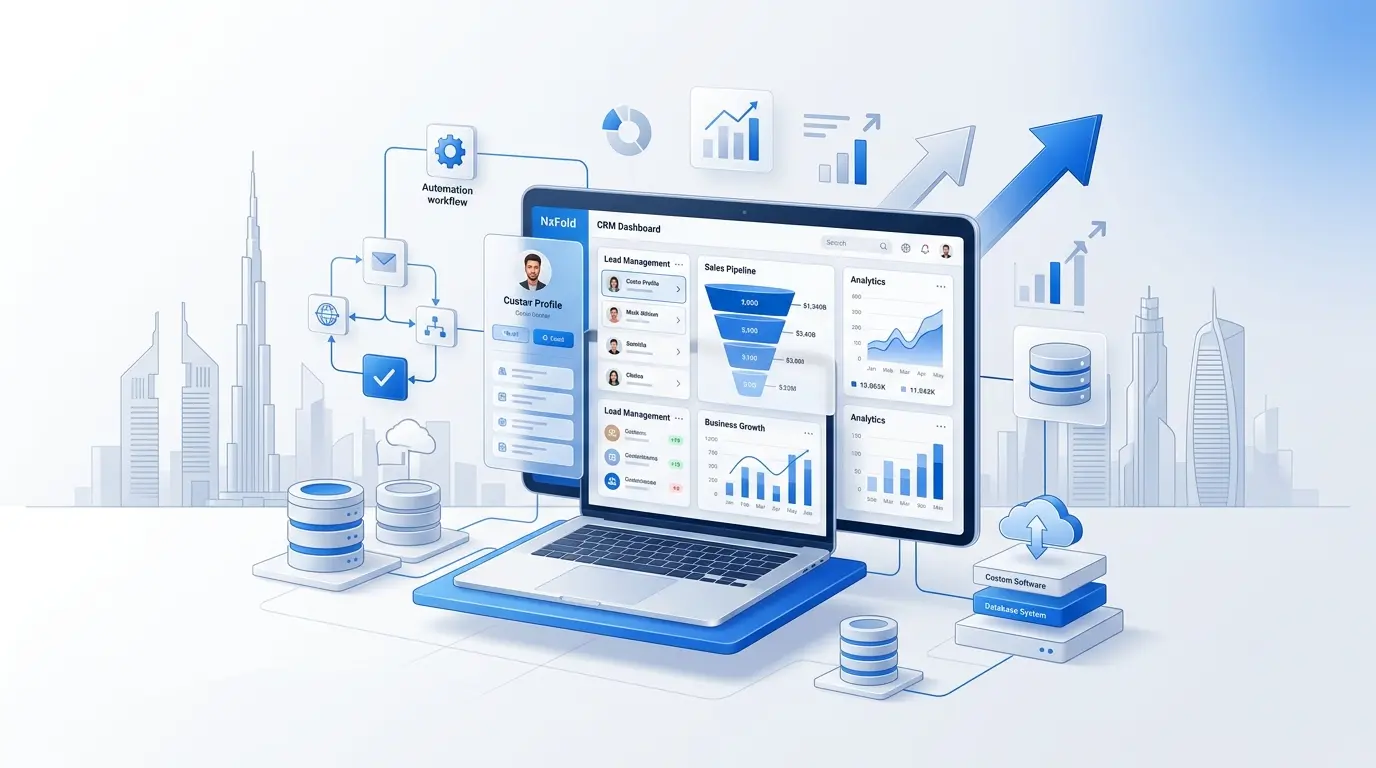
Rental management software is five modules that have to agree with each other: fleet and availability, contracts, customers, finance, and — in this market specifically — compliance, meaning Salik, traffic fines, Emirates ID and licence records, and VAT.
International products handle the first four competently and the fifth barely at all, because Salik reconciliation and RTA fine attribution are not problems that exist in the markets they were built for. That gap is the single most common reason a UAE operator ends up with either a heavily customised deployment or a purpose-built system. It is not that the generic tools are bad; it is that the part they skip is the part that costs you money every month.
The threshold where it matters is usually somewhere around thirty to fifty vehicles. Below that, spreadsheets plus discipline genuinely works.
What "UAE-Specific" Actually Means
This is the section that separates a product built for this market from one that was translated into it.
Salik reconciliation. Toll charges arrive against the vehicle, not the renter. Attributing them means matching each charge's timestamp to the contract that was active at that moment, then to the customer on it. Done manually across sixty cars, this is somebody's week every month, and the errors run in one direction — unrecovered charges. Done properly, it is a background job that produces a recoverable balance per contract.
Traffic fines. Same matching problem, higher stakes, longer tail. A fine can surface weeks after the rental ended and after the deposit has been returned, so the system needs to hold the link between vehicle, time window, contract and customer long after the car has been rented out four more times. Operators who handle this well hold a portion of the deposit against a defined fine window; operators who handle it badly absorb the fines.
Emirates ID, licence and passport records. Captured at handover, tied to the contract, with expiry awareness. This is both an operational requirement and a data-protection one — you are storing identity documents, which brings obligations around retention and access that a spreadsheet on a shared drive does not satisfy. The UAE PDPL compliance guide covers what that means in practice.
Deposits and pre-authorisations. Held, partially released, drawn against for fines or damage. The reconciliation between what was authorised, what was captured and what was returned is where a lot of small losses hide.
VAT and e-invoicing. Rental invoicing has to produce compliant tax documents, and the UAE's e-invoicing regime is tightening — worth scoping explicitly rather than assuming your system will cope. See UAE e-invoicing integration in Dubai.
The Modules, and What Each Is Really For
Fleet and availability. One calendar per vehicle that a booking, a service slot and a handover all read from. The failure this prevents is the double-allocated car — the same failure a booking website has to prevent on the front end, which is why the two systems need one source of truth between them rather than two calendars that sync hopefully.
Contracts. Quote, agreement, handover condition report, extension, return. The value is in generating the paperwork from the record rather than retyping it, and in the extension case in particular — an extension that is recorded as a new contract loses the fine and Salik continuity that makes attribution work.
Customers. A record that survives the rental. Documents, rental history, outstanding balances, blacklist status. The operators who get the most out of a system are usually the ones who discover they have far more repeat customers than they thought.
Finance. Invoices, payments, outstanding balances, and — critically — all of it reconciled against the contract it belongs to rather than sitting in a separate accounting silo. This is where the spreadsheet model breaks first.
Maintenance. Service scheduling and history per vehicle, so downtime is planned rather than discovered on the morning a car was due out. Also the input to any honest utilisation number.
Reporting. Utilisation, revenue per vehicle, average rental duration, what is overdue right now. The test of a reporting module is whether a manager acts on it or exports it — if the answer is export, it is a data dump rather than reporting.
When we built Vara Fleet, those modules were the scope, with the compliance layer treated as a first-class concern rather than an add-on, and with alerts for overdue returns and unattributed fines surfacing as work rather than sitting in a report nobody opens.
Build, Buy, or Configure
The honest hierarchy, cheapest first:
Configure something off the shelf. If your operation is conventional and your fleet is under about fifty vehicles, this is almost always right. You will pay per vehicle or per user, you will do Salik and fines partly by hand, and you will be running next month rather than next year.
Buy a regional product. Products built for this market handle the compliance layer natively. This is the option most operators should look at hardest and often skip, because the international brands market more loudly.
Build custom. Justified when your workflow genuinely differs, when the compliance automation is the whole point and nothing off the shelf does it properly, when you are multi-branch with unusual permission requirements, or when per-vehicle licensing across a large fleet over several years exceeds the build cost. The general form of this decision is in ERP development in Dubai: build vs buy, and the cost framing in custom software development in Dubai.
One caution worth stating plainly: do not build to avoid subscription fees alone. Owning software means owning its maintenance, and the ongoing cost of that is routinely underestimated by operators comparing a one-off build price against a monthly bill. Build when the software has to do something specific that you cannot buy — not to save the licence fee.
How It Sits Alongside the Booking Website
These are two systems with one relationship, and getting that relationship wrong is the most common integration mistake in this business.
The website's job is to sell: show the fleet, resolve a price, take the reservation. The management system's job is to hold the truth: which car, which contract, which money. Availability must have exactly one owner, and it should be the management system, with the website reading from it. The alternative — a website with its own calendar that syncs periodically — produces exactly the oversold-vehicle problem the whole system exists to prevent.
We have built both halves. Let's Go is the customer-facing side of this — instant pricing, delivery options at checkout, a booking that completes in under three minutes — and it only works because the price and availability it shows are resolved from a single authoritative source rather than guessed at. If you are scoping both, scope the interface between them first; it is the part that decides whether either works. That interface is web app development territory, and the vertical context is on our car rental website development page.
Common Mistakes
Buying on feature-list length. Every product demos well. Ask instead: show me a Salik charge being attributed to a renter, and show me a fine that arrived three weeks after the return. Those two workflows separate the products built for this market from the ones that were not.
Treating the extension as a new contract. It breaks fine and toll continuity, which is the exact thing you bought the system for.
Two calendars. The website and the back office both believing they own availability. One of them must read from the other.
Migrating everything on day one. Start with fleet and contracts. Finance and compliance follow once the team trusts the data. A migration that tries to move five years of history in week one usually results in a system nobody uses and a spreadsheet that quietly survives.
Building before the process is stable. If your workflow is still changing monthly, you will be paying to rebuild it. Configure something first and let the process settle.
Frequently Asked Questions
Does rental software reconcile Salik and traffic fines automatically? The good regional ones do; most international products do not, because the problem does not exist in their home markets. The mechanism is matching each charge's timestamp to the contract active at that moment, and therefore to the renter, then surfacing it as a recoverable balance rather than a line in a statement.
At what fleet size do spreadsheets stop working? Usually between thirty and fifty vehicles, and they stop working for money before they stop working for availability. The telltale signs are a fine nobody can attribute, or a deposit returned on a car with an outstanding charge.
Should we buy or build? Configure something off the shelf if your operation is conventional. Look hard at regional products, which handle the compliance layer natively. Build when the compliance automation is the whole point, your workflow genuinely differs, or per-vehicle licensing across a large fleet over several years exceeds the build cost — not simply to avoid subscription fees.
Is multi-branch supported? In most serious products, yes, with fleet visible across branches and permissions scoped per branch. The requirement that catches people out is a car booked in one location and returned in another, with both branches' books agreeing afterwards.
How does it work with our booking website? As the system of record behind it. The site sells and takes the reservation; the management system holds the car, the contract and the money. Availability must have exactly one owner — the back office — with the website reading from it rather than keeping its own calendar.
How long does implementation take? A configured off-the-shelf deployment is weeks. A custom build is a multi-module project measured in months. In both cases the real timeline is set by data migration and by how settled your process is, not by the software.
What about VAT and e-invoicing? Rental invoicing has to produce compliant tax documents, and the UAE regime is tightening. Scope it explicitly rather than assuming the product handles it, particularly if you are considering an international tool.
Can we start with one module? Yes, and you should. Fleet and contracts first, then finance, then compliance once the team trusts the data. Attempting everything at once is how a system ends up unused beside a surviving spreadsheet.
The Bottom Line
The question is rarely "which rental software is best." It is "what does this market require that a generic product skips," and the answer is consistently the compliance layer — Salik, fines, identity documents, VAT — because that is the part nobody else had to build.
Work out what unattributed tolls and fines cost you last quarter before you evaluate anything. If the number is small, configure an off-the-shelf product and get on with it. If it is a person's week every month plus real leakage, you have both the business case and the specification.
If you want that scoped against your fleet size, branch structure and existing booking site, get in touch. We have built rental management platforms and the customer-facing booking systems that sit in front of them, and we will tell you when configuring something existing is the better answer.
Have a project in mind?
Ideas to put into practice.
Turn what you have learned into a clearer plan for your website or product. Tell us what you want to build.
Start your project