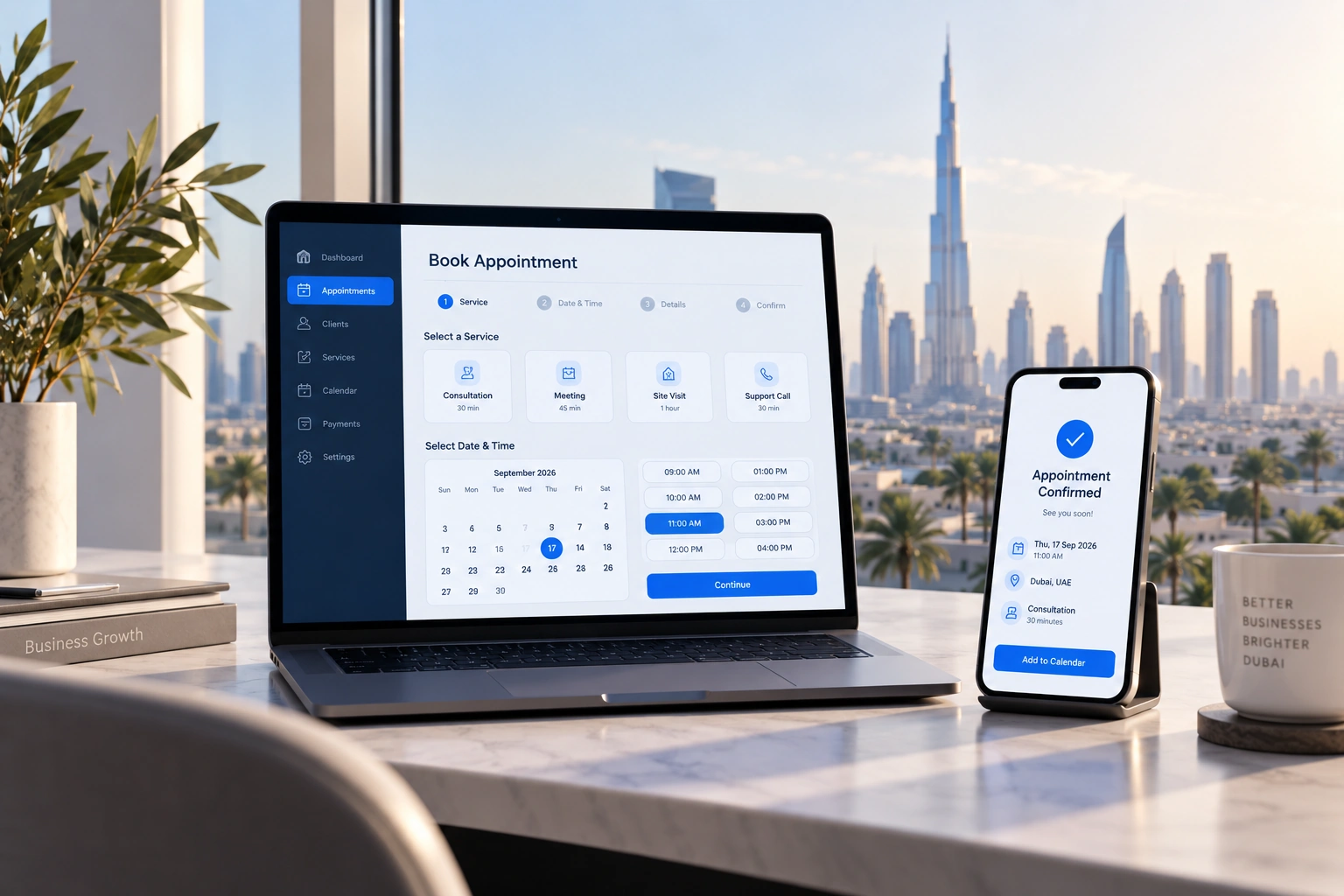
Custom web applications for UAE businesses, used in the browser: customer portals, dashboards and internal operations tools. We define user roles, workflows, data and integrations before development, with Arabic and English interfaces where your users need them.
Off-the-shelf software is built for the average business. You're not average.
When your operations don't fit the software, the software wins — and your team adapts, works around it, copies data between systems, and builds manual processes that break under growth. The cost isn't just inefficiency. It's compounding drag on every part of the business that touches that tool.
01
Spreadsheet operations
When critical data lives in a Google Sheet that three people edit simultaneously, you have a reliability problem masquerading as a process.
02
Disconnected tools
Five tools, three different logins, manual data transfer between them, no single view of your business. Every gap is a mistake waiting to happen.
03
Software that doesn't fit
Off-the-shelf SaaS is built for the 80% use case. If your business is in the remaining 20%, you spend years working around constraints that don't need to exist.
04
Scale ceilings
The tool that worked at 100 users breaks at 10,000. Rebuilding under pressure, at scale, with live customers depending on the system — that's the worst time to do it.
100%
Custom-built to your workflow
Not adapted from someone else's template
24h
Quote turnaround
Itemised and fixed-price, within a day
0
Platform lock-in
Full source code ownership on handover
Estimated impact, ~90 days post-launch.
(✦) — What you get
Software that fits your business. Not the other way around.
01
Custom dashboards
The metrics your team needs, in the layout that makes sense for how they work. Not a standard report nobody reads.
02
Secure authentication
Role-based access control, SSO, MFA, and audit logging — built from architecture, not bolted on after launch.
03
Database design
Data models designed around your actual business logic. Clean, normalised schemas that perform at scale and are easy to extend.
04
Real-time data
Live dashboards, instant notifications, and reactive interfaces that keep your team informed without manual refresh.
05
API integrations
Connect to your existing tools — ERP, CRM, accounting, logistics — so the app fits into your ecosystem rather than replacing it.
06
Workflow automation
Repeatable manual processes replaced by automated flows. Status updates, notifications, approvals, and data sync handled without human intervention.
07
Scalable architecture
Designed to handle 10× your current load without structural change. Good architecture compounds as you grow.
08
Full documentation
Architecture docs, API references, deployment guides, and a handover session. The next developer can work on it without calling us.
(02)
Application planning
Choose the right application for the work it needs to do.
03 / 03
01
Website, web application or mobile app?
A business website mainly presents your services and helps visitors enquire. A web application lets customers or staff complete tasks against shared business data in a browser: check a booking, update a record, approve a request or manage a pipeline. The difference is the work a user can complete, not how many pages it has.
Our mobile app service covers iOS and Android apps distributed through the stores. A product can need a public website, a browser-based portal and a mobile app; we scope each interface and the APIs connecting them. For a customer portal, we define which records customers can access and which management views staff need.
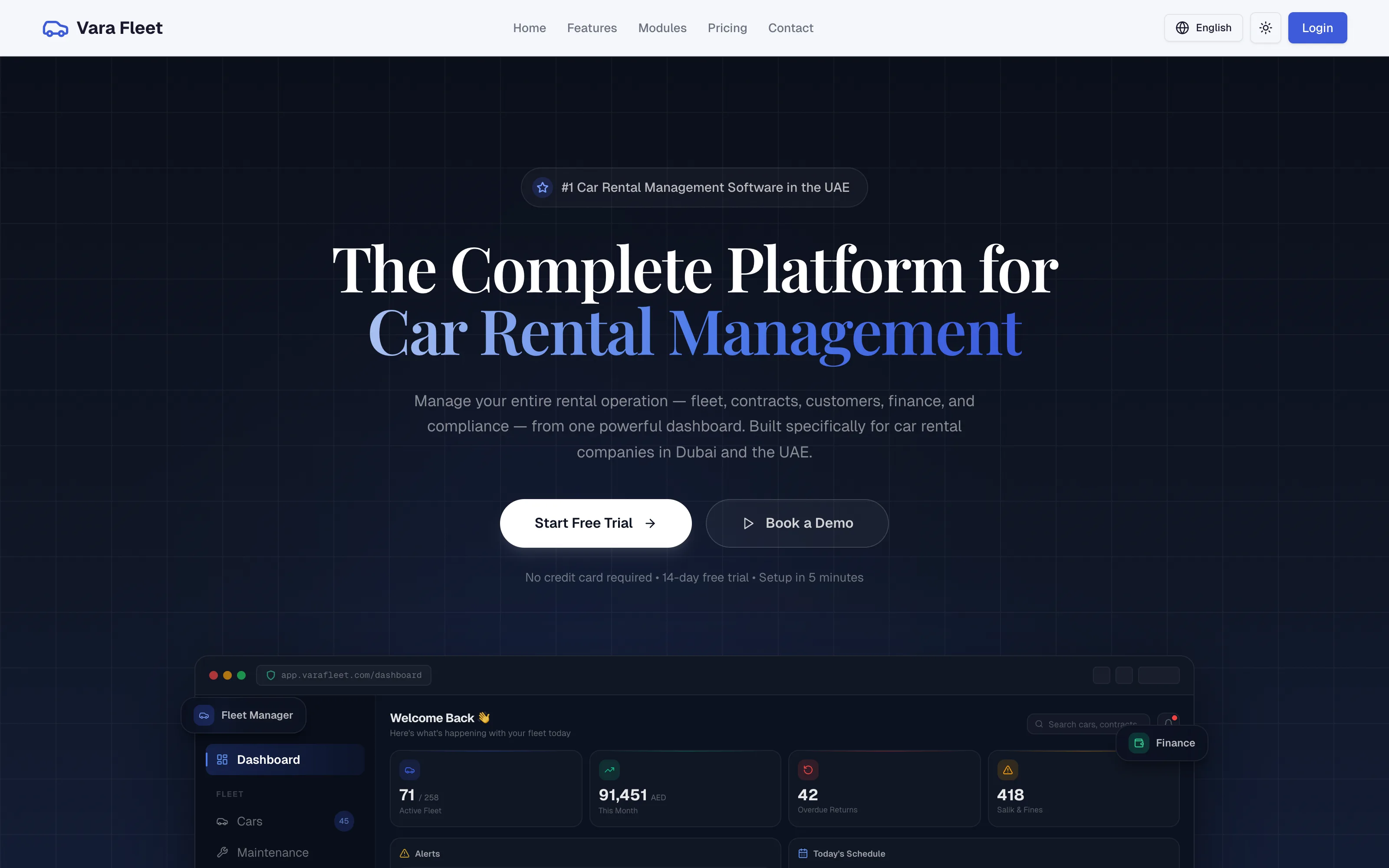
Vara Fleet brings fleet availability, rental contracts, customer records, invoices, payments and maintenance into one operational dashboard. Its case study describes permissions scoped per branch and Salik or traffic-fine charges matched to the active rental contract. These are connected business rules and records that the team uses to run the operation.
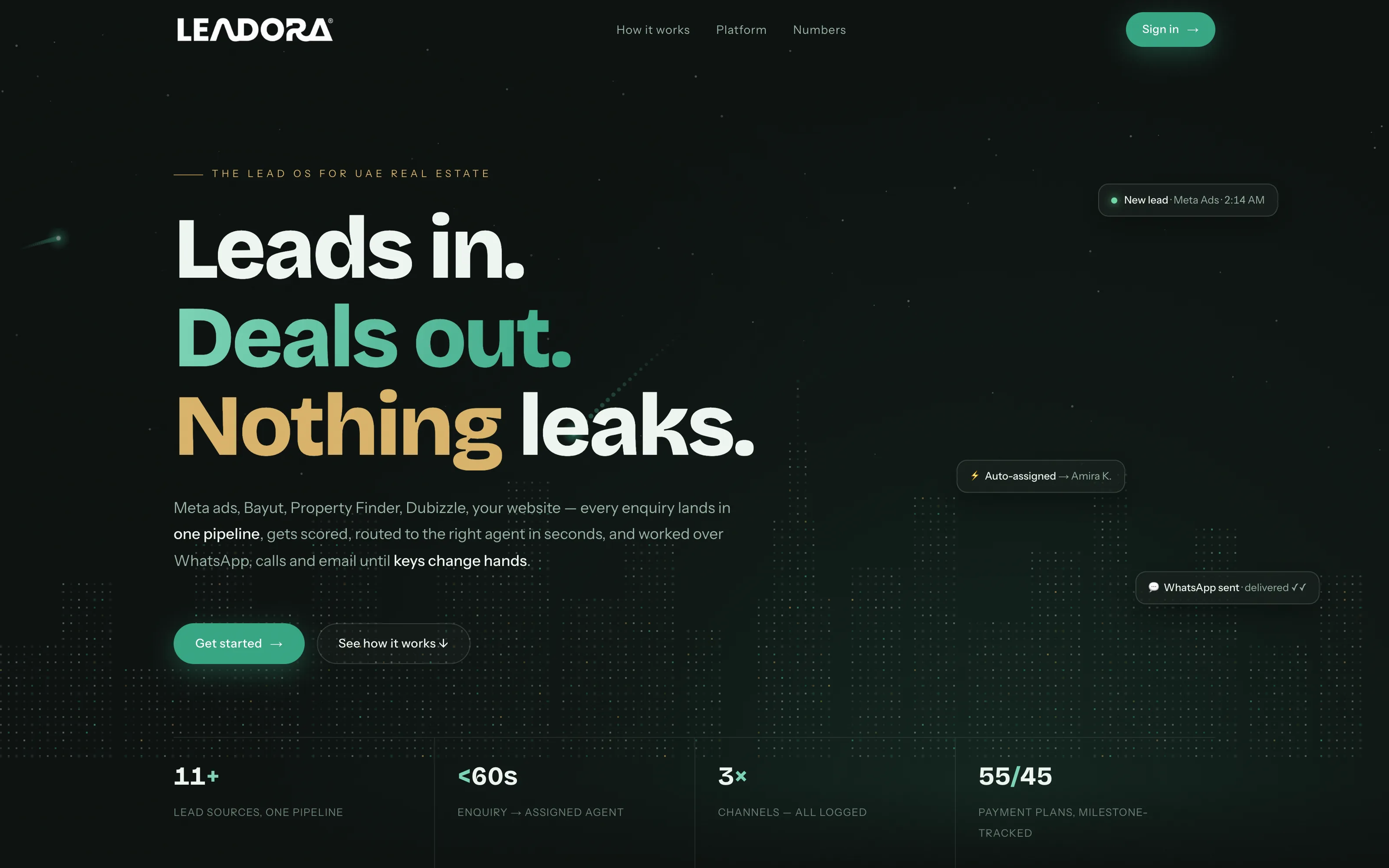
Leadora brings property-portal, advertising and website enquiries into a multi-tenant CRM. Rule-based agent assignment, a shared conversation timeline and WhatsApp Business API integration support the journey from enquiry to payment milestones. This is the kind of workflow and integration detail we establish when scoping a business web application.
Orseda is NxFold's demonstration project for a multi-user workspace: projects, tasks and sprints with live progress and delivery analytics. It shows how collaborative application interfaces handle shared work and data-dense screens.
For a SaaS brief, account boundaries and user permissions need to be defined alongside the core workflow. We use the initial scoping sessions to agree what the first version must do, what data it needs and which integrations it depends on. The SaaS service explores the product-development scope in more detail.
We start by mapping your workflow, then build software that removes the friction — secure authentication, real-time data, clean dashboards and APIs that connect your tools. Built on a robust stack with room to scale, so the app grows with your business instead of holding it back.
(04) — What's included
✓Custom dashboards and admin panels
✓Secure authentication and user roles
✓Database design and API integrations
✓Real-time data and automation
✓Scalable architecture built to grow
(✦) — Pricing
Published, fixed, and agreed before we start.
Custom software is the service most often quoted by the hour and least often finished on budget, so we scope it first and publish both ends of the range instead.
Internal tool or dashboard
AED 15,000 – 40,000
One workflow done properly — records, roles, reporting and an admin view your team runs without us.
Business platform
AED 45,000 – 100,000+
Multiple user roles, live data and integrations into the systems you already run. Scoped and specified before a price is quoted.
Paid against milestones: a deposit to start, a payment at specification sign-off, and the balance on handover.
Fixed price agreed after scoping, before a line is written. No hourly billing, and the repository is yours on day one.
Dashboards, customer portals, booking systems, internal operations tools, marketplace platforms, SaaS products, admin panels, data visualisation applications, and custom business platforms — anything tailored to your specific workflow that you cannot buy off the shelf.
How do you scope a web application project?+
We begin with 2–3 discovery sessions that map your existing workflow, identify where friction and manual work accumulate, and define the minimum viable feature set. We then produce a detailed specification document with user flows, data model, integration requirements, and a fixed-price proposal before any code is written.
Can it integrate with our existing software?+
Yes. We connect to your existing tools via APIs — ERP systems, CRM platforms, accounting software, payment providers, logistics platforms, and communication tools. We document all integration requirements during scoping and test every integration in a staging environment before launch.
Is the application secure?+
Security is architectural. We implement role-based access control, multi-factor authentication options, encrypted data storage, input sanitisation, parameterised database queries, secure API key handling, and HTTPS enforcement. For sensitive applications we conduct dedicated security reviews and can recommend third-party penetration testing.
Will it scale as our business grows?+
Yes — we design for your 10× load from the start. This means stateless architecture, horizontal scalability, efficient database indexing, caching layers, and load testing before launch. Scaling up is a configuration and infrastructure change — not a code rewrite.
How long does a web application take to build?+
A focused internal tool or dashboard typically takes 6–10 weeks. A full business platform with complex data models, authentication, integrations, and multiple user roles runs 12–24 weeks. We confirm timelines after scoping and deliver against agreed milestones.
Can non-technical team members manage content or data?+
Yes. We build admin panels and data management interfaces specifically designed for non-technical users. Every application includes management views that let your team add records, update statuses, manage users, and export data — without any developer involvement.
Do you build mobile apps as well?+
Yes. NxFold also develops iOS and Android apps through our mobile app development service; Superior and Halaly are existing examples. This service focuses on applications used in the browser. We scope a companion mobile app and any shared backend or APIs separately when the product needs both.
What does the handover process look like?+
You receive: the full source code repository, architecture documentation, API reference, deployment guide, environment setup instructions, and a handover session where we walk through the system. The goal is that any competent engineer can maintain and extend the application without calling us.
How much does custom web application development cost?+
Internal tools and dashboards typically start from AED 15,000–40,000. Complex business platforms with multiple user roles, integrations, and custom logic range from AED 45,000 to AED 100,000+. We provide fixed-price quotes after a scoping session — not open-ended hourly billing.
Can you build a SaaS product from scratch?+
Yes. Leadora is a multi-tenant CRM product, and Vara Fleet is an operational rental platform built by NxFold. For a new SaaS product, we define the core workflows, account boundaries, user permissions and integrations before scoping the MVP and later phases. Subscription and billing requirements are agreed during scoping.
Do you build Arabic-language applications?+
Yes. Full RTL Arabic interfaces with proper typography, RTL-aware data tables, bilingual user preferences, and Arabic date/number formatting. We design both language interfaces simultaneously so each feels native — not like a translated version.
Can the application handle real-time data?+
Yes. We implement WebSocket connections or server-sent events for real-time features: live dashboards, instant notifications, collaborative features, and activity feeds. All real-time infrastructure is load-tested before launch.
What database technology do you use?+
We primarily use PostgreSQL for relational data — reliable, performant, and well-supported. For specific requirements we also use Redis for caching and session storage. We design database schemas carefully to perform well at scale and stay easy to extend.
Do you offer ongoing support and feature development after launch?+
Yes. We offer monthly retainers for ongoing feature development, bug fixes, dependency updates, and performance monitoring. Most clients continue with a retainer because they have a backlog of features to build as the product matures.
(✦) — Ready to build the right tool?
Stop managing your business with software built for someone else.
Describe the workflow you need to fix. We'll map a solution and send a scoped proposal within 24 hours.