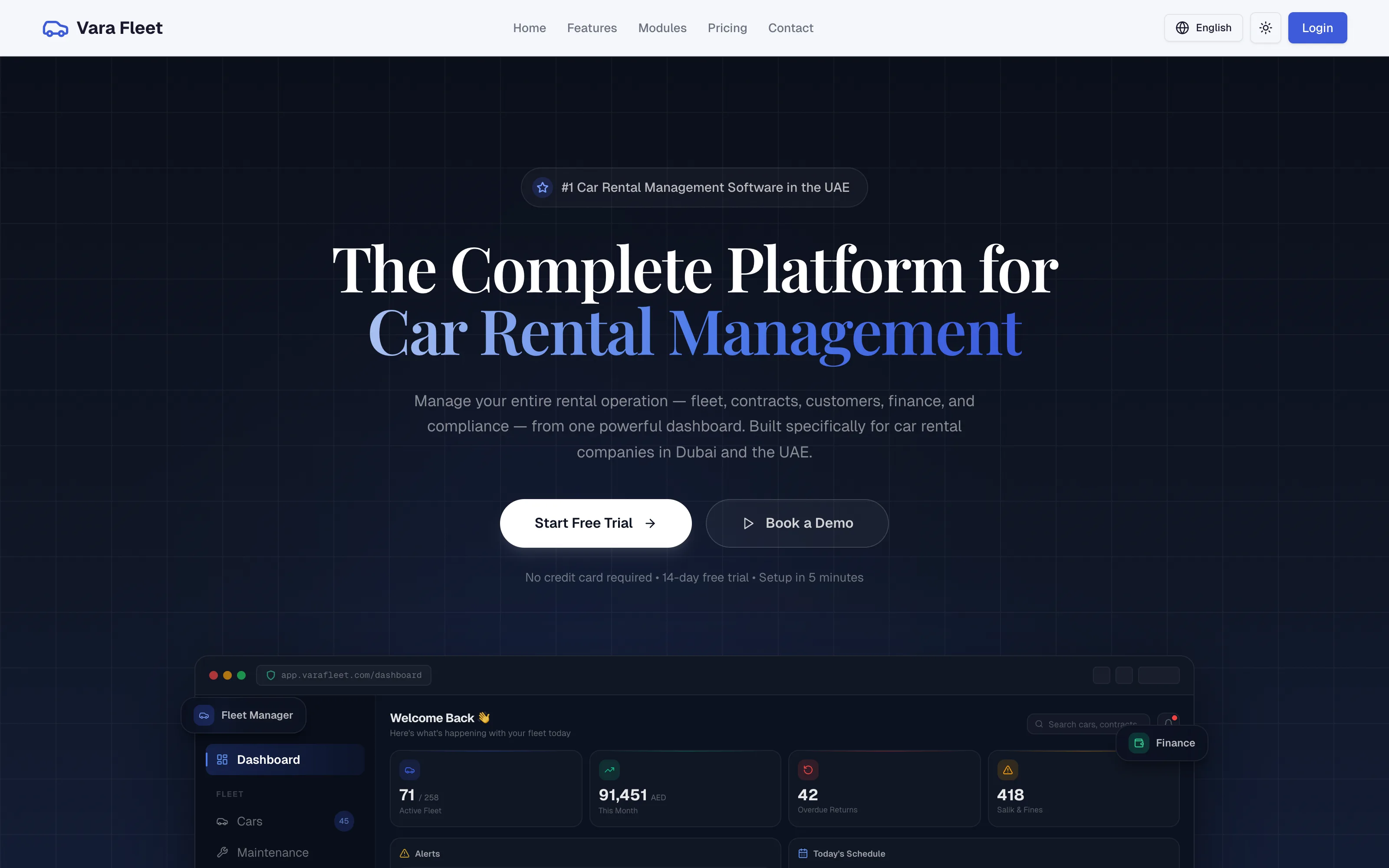
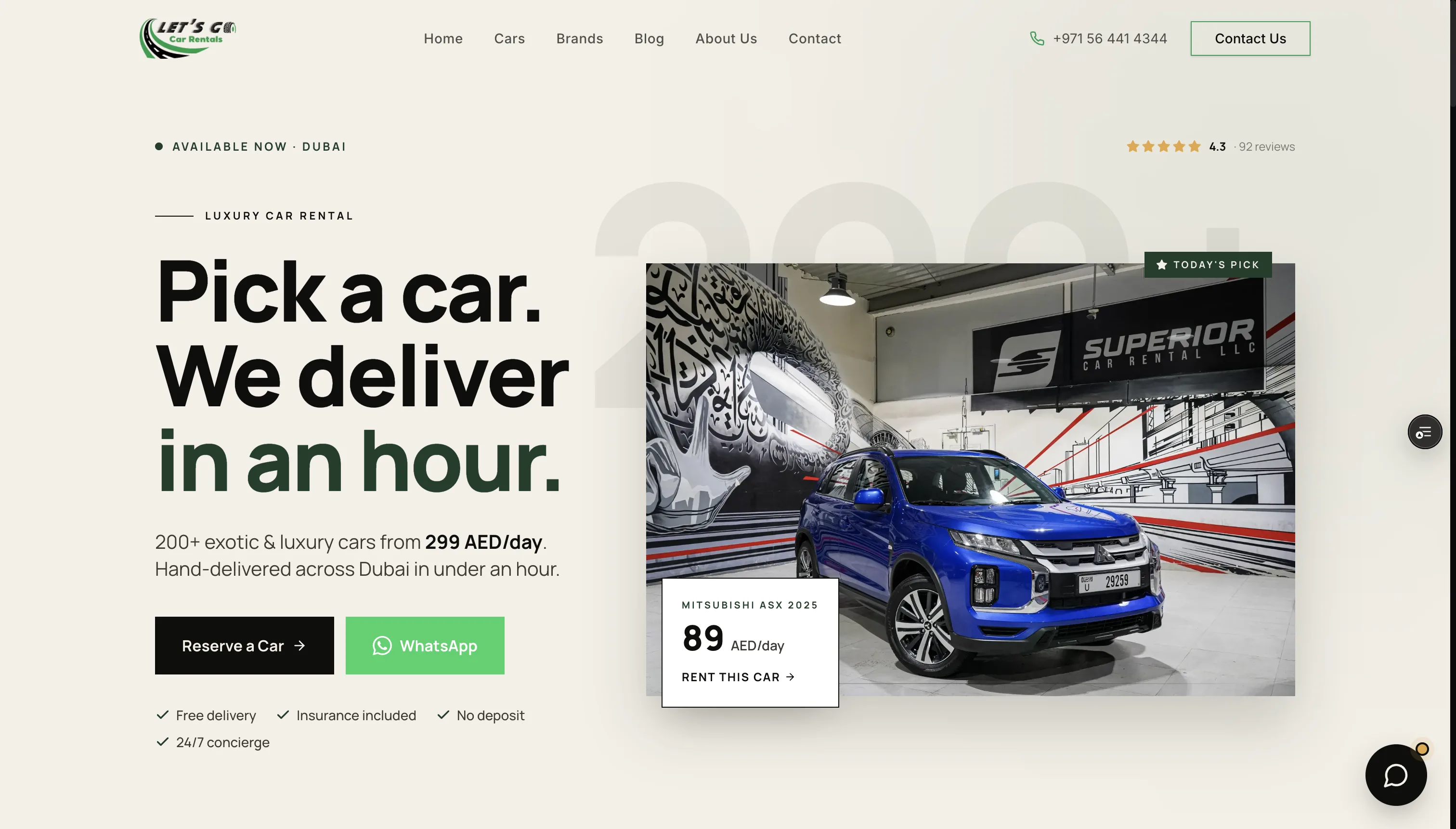
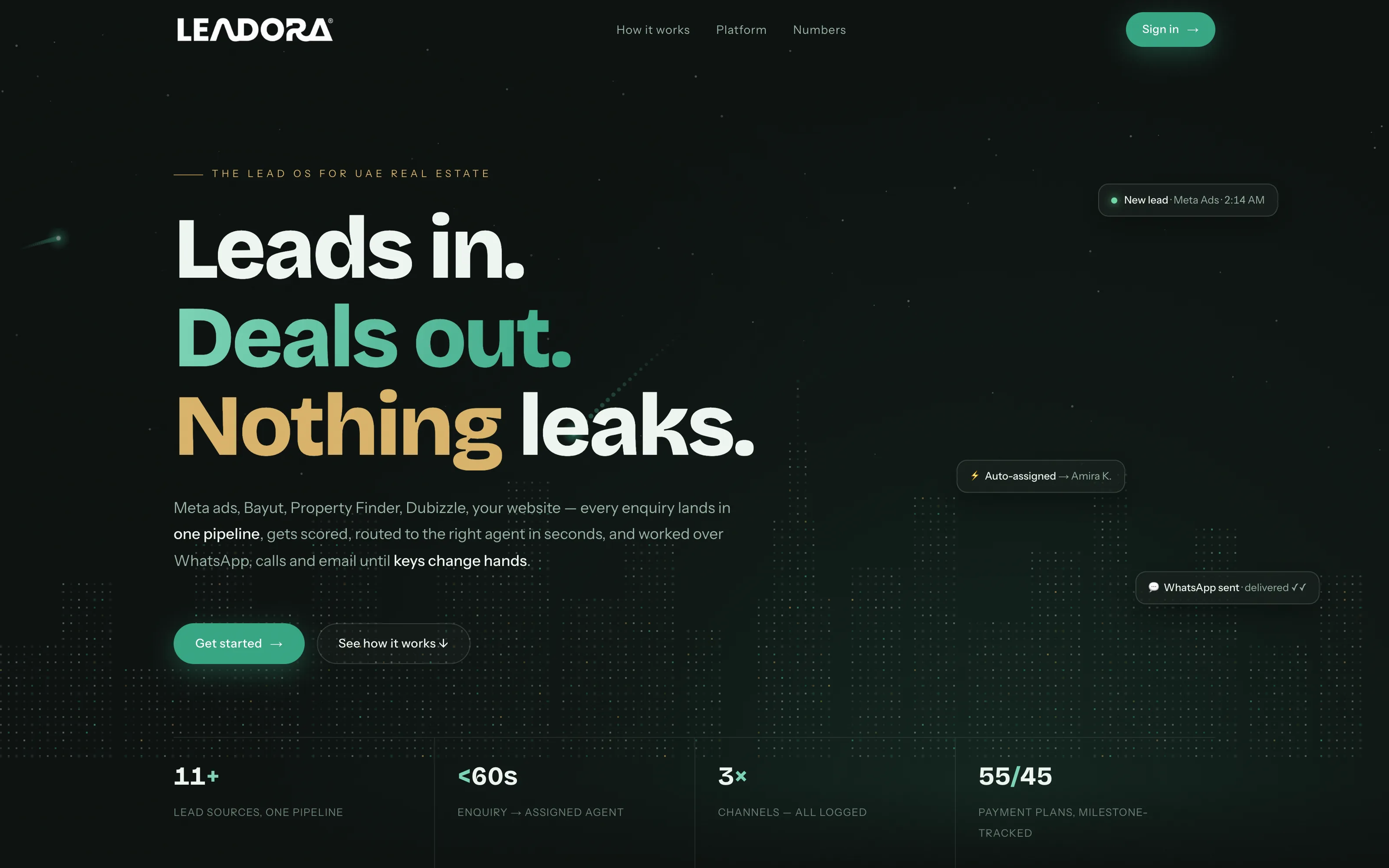
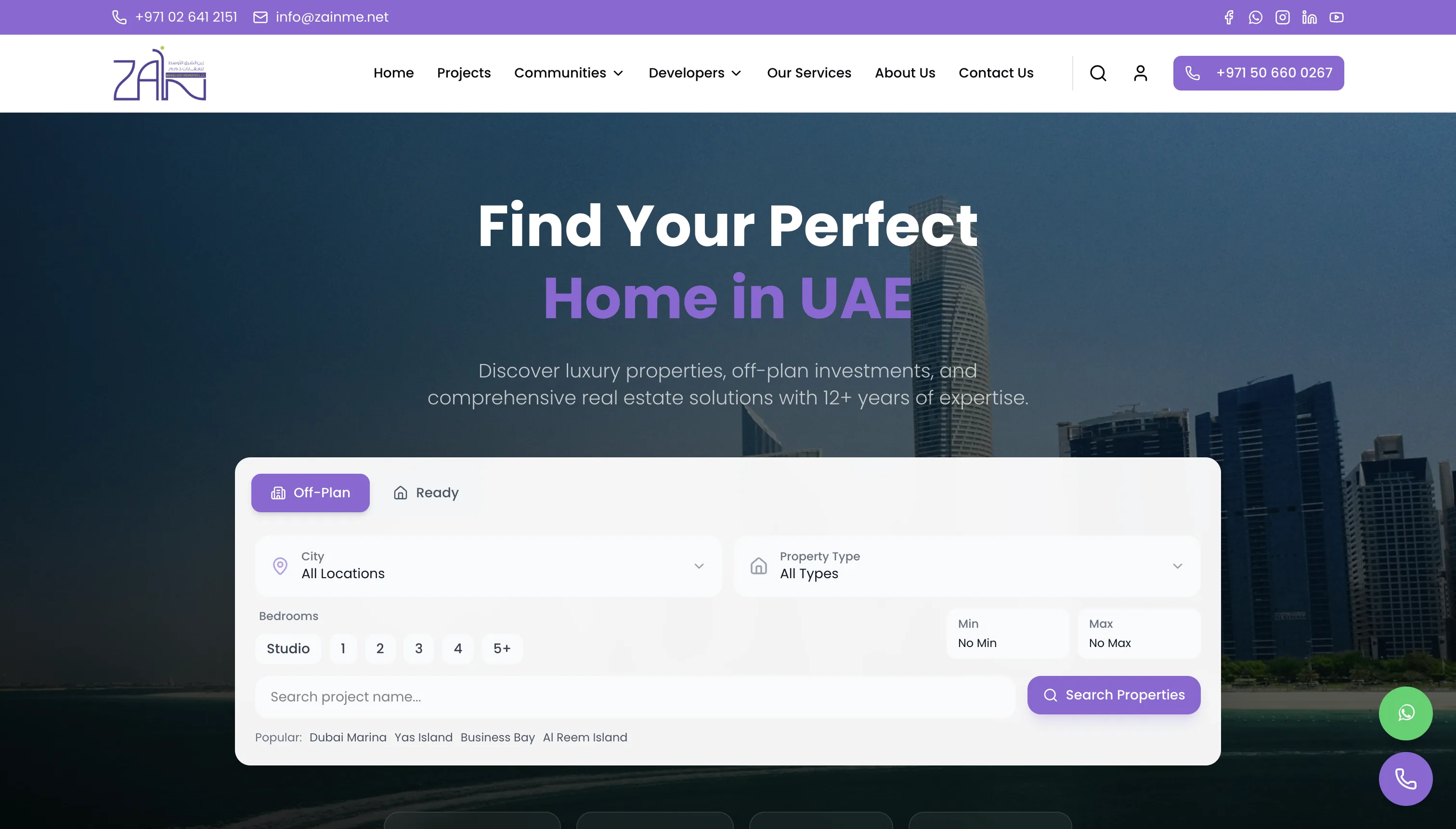
Web application development in Dubai, built to be owned.
Dubai is the most competitive digital market in the region. Your competitors are already bidding on your keywords, your buyers compare three sites before they call, and most of them decide in the first five seconds. We build for that reality — bilingual from day one, fast on real mobile networks, and measured on enquiries rather than impressions.
Explore the project, the thinking and the work behind it.
Dubai HQ · Serving Dubai · Bilingual EN / AR
100%
Custom-built to your workflow
Not adapted from someone else's template
24h
Quote turnaround
Itemised and fixed-price, within a day
0
Platform lock-in
Full source code ownership on handover
Estimated impact, ~90 days post-launch.
16 brands and products shipped — across the UAE and beyond
(✦) — The market
What delivering digital work in Dubai actually involves
01
Bilingual from the start
Dubai's audience splits across English and Arabic. Customer-facing strategy, identity, content and interfaces must account for both from the start, with Arabic written and designed for right-to-left reading rather than added after the English work is finished.
02
Built for acquisition pressure
Winning attention in Dubai is expensive. Clear positioning, short customer journeys and measurable outcomes matter because weak work wastes the spend used to bring people to it, whether the channel is search, social, referral or a sales team.
03
Local trust signals wired in
UAE trade licence details, VAT-compliant invoicing, a real local address and WhatsApp as a first-class contact channel should appear consistently wherever they are relevant — across the brand, customer journey and digital touchpoints.
04
Made for mobile-first decisions
We review customer-facing work at real phone sizes and on UAE mobile connections, not only on a fast office laptop. A page, interface or campaign asset that becomes unclear on a phone loses the decision before the enquiry starts.
(01)
Automating here
What web application development in Dubai has to account for
04 / 04
01
Most operations here outgrow the spreadsheet long before they replace it
Free-zone and mainland businesses in Dubai tend to scale faster than the systems holding them together. The operation ends up running on a shared spreadsheet, a WhatsApp group, and one person who knows how the whole thing actually fits together. It works — right up until a second branch opens, or that person takes leave.
The failure is rarely dramatic. It is a vehicle double-booked, an invoice raised twice, a quote nobody can find, a number in a board pack nobody can trace back to a source. A web application is what turns a process people carry in their heads into one the business owns and can hand to the next hire.
02
The integrations are local, and the compliance is not optional
Software built for a UAE business meets a specific set of obligations before it does anything clever. Invoices carry VAT at 5% and a TRN, records have to survive an audit years later, and corporate tax reporting means the numbers in the system need to reconcile with the numbers in the accounts — not approximately, exactly.
In practice that means talking to the tools already in the building: accounting in Zoho Books, QuickBooks or Xero; payments through Network International, Telr or Stripe; and WhatsApp Business, because in this market that is where customers and staff actually reply. Both interface languages are first-class, because the people using an internal system are rarely all reading the same one.
03
Scope is the risk on a custom build, not the code
Custom software in this market fails on scope far more often than it fails on engineering. A project that starts with a conversation and a rough budget, and defers the hard definitions to "we will figure that out as we go", is a project whose price moves — usually in one direction, usually after you have committed.
So we specify first. Discovery produces a written scope: every screen, every user role, every integration, and an explicit list of what is not in this phase. The price is fixed against that document before a line of code is written. An internal tool or dashboard runs AED 15,000 to 40,000; a business platform with multiple roles, live data and integrations into systems you already run is AED 45,000 to 100,000 and up, typically six to ten weeks.
04
You own it, including the option to leave
Everything transfers on final payment — source code, repository, database and deployment configuration. There is no per-seat licence back to a platform we control, and no part of the system that only keeps working while we are being paid.
It is hand-written rather than assembled in a low-code builder, for the same reason: another engineering team can read it, extend it, or take it over entirely. We document it on the assumption that one day someone else will.
(02) — What's included
Dubai rewards businesses that communicate credibility immediately and perform under commercial pressure. These are market constraints we plan for in every engagement.
They genuinely understood how our guests browse. Direct bookings come straight through the site now, and I spend far less time going back and forth on WhatsApp.
NxFold's ability to turn ideas into beautifully designed and fully functional websites is unmatched.
Mayyar
CEO @Graphic
I highly recommend working with them for any project you have in mind.
Khaled Nadam
Software Engineer
What sets NxFold apart is their ability to combine technical skills with creativity. I'm sure they will leave a lasting impression on its clients.
Ahmad Alidlibi
Software Engineer
(✦) — Pricing
Published, fixed, and agreed before we start.
Custom software is the service most often quoted by the hour and least often finished on budget, so we scope it first and publish both ends of the range instead.
Internal tool or dashboard
AED 15,000 – 40,000
One workflow done properly — records, roles, reporting and an admin view your team runs without us.
Business platform
AED 45,000 – 100,000+
Multiple user roles, live data and integrations into the systems you already run. Scoped and specified before a price is quoted.
Paid against milestones: a deposit to start, a payment at specification sign-off, and the balance on handover.
Fixed price agreed after scoping, before a line is written. No hourly billing, and the repository is yours on day one.
(07) — FAQ
Web Application Development in Dubai — common questions
Still deciding?
Send one line about your project and we will tell you what it costs and how long it takes — within 24 hours, with no sales call.
Yes — Dubai is our headquarters and where the team works from. You can meet us in person, and most of our live case studies are UAE businesses.
Do you deliver the Arabic version too, or just English?+
Both, as standard. Arabic is handled as a primary deliverable with its own writing, typography and right-to-left layouts where the work includes an interface. We do not finish the English work and attach a machine translation afterwards.
How long does a Dubai project usually take?+
Timelines depend on the service and scope. A focused brand or marketing engagement can take three to six weeks; e-commerce, applications and automation usually take longer. We define the deliverables and review stages before you commit.
What is the cost of Web Application Development in Dubai?+
Published prices for Web Application Development: Internal tool or dashboard: AED 15,000 – 40,000; Business platform: AED 45,000 – 100,000+. The final quote depends on the agreed scope and integrations. Send your brief for an itemised proposal.
Can we meet in person in Dubai?+
Yes. Dubai is our home market and where the team works from, so kickoff, design reviews and handover can all happen face to face. Plenty of clients prefer to run it remotely — both work equally well.