Web Apps
11 min read
Appointment Booking System Development in Dubai for Service Businesses
A practical guide to building appointment booking systems in Dubai for clinics, salons, consultants, events, fitness, and service teams.
By NxFold
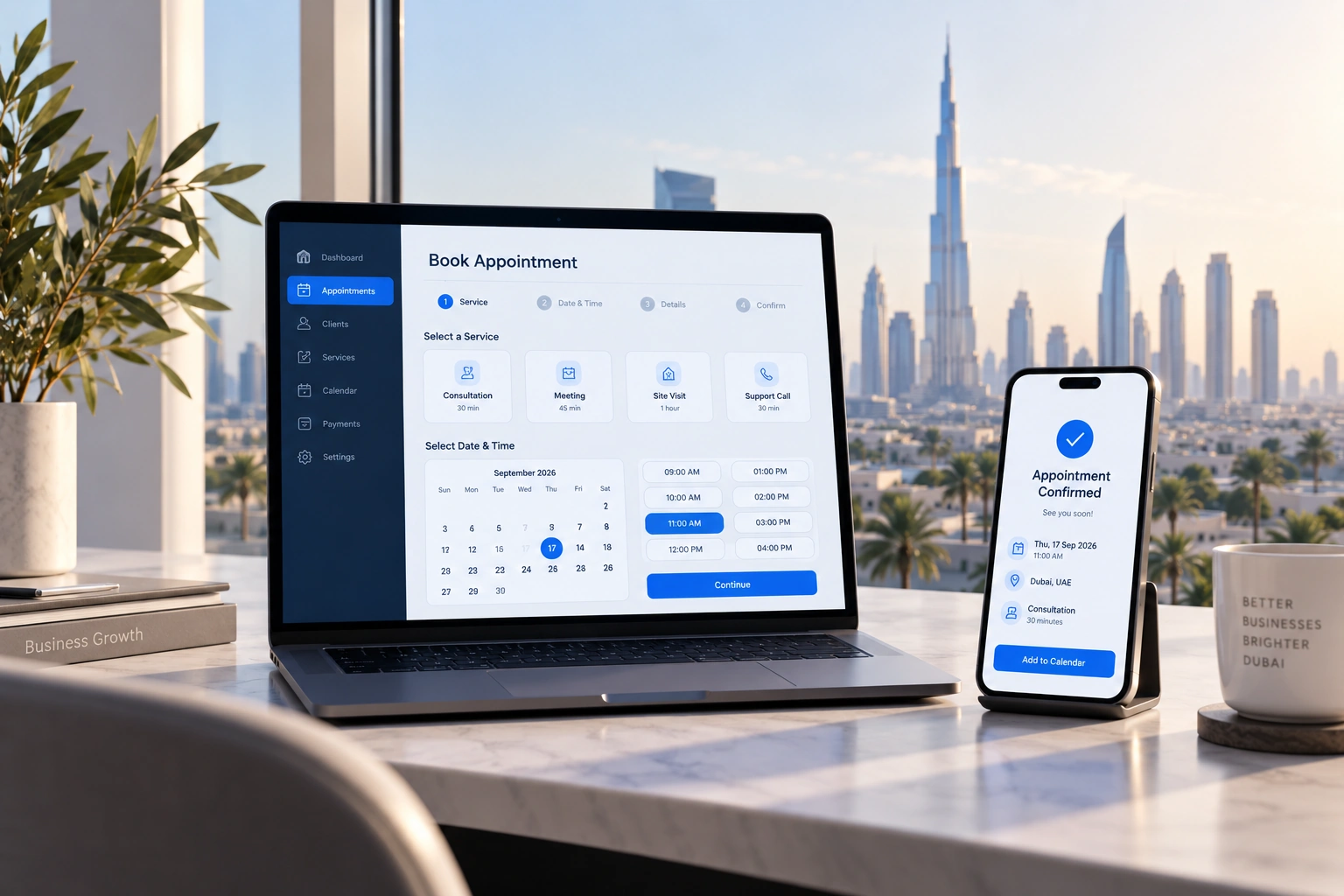
For many service businesses in Dubai, the booking experience is where a lead either becomes a customer or disappears. A visitor may be ready to book a consultation, treatment, class, site visit, event slot, or service appointment, but if the process depends on slow messages, manual availability checks, missed calls, or repeated back-and-forth, the business loses momentum.
An appointment booking system solves that problem by turning availability, customer details, reminders, payments, staff schedules, and admin follow-up into one clear flow. It can be a simple booking form on a website, a more advanced customer portal, a mobile app, or a custom internal dashboard connected to WhatsApp and CRM workflows.
This guide explains how appointment booking system development in Dubai should be planned, what features matter, when a custom system makes sense, and how to avoid building an expensive tool that staff and customers do not actually use.
What is an appointment booking system?
An appointment booking system is a digital flow that lets customers request or confirm a time slot, while giving the business control over availability, capacity, staff assignment, reminders, and follow-up.
At the basic level, it may collect a name, phone number, service type, preferred date, and preferred time. At a more advanced level, it can manage multiple branches, different staff calendars, paid deposits, rescheduling rules, customer history, WhatsApp reminders, admin approvals, and reporting.
The right version depends on how your business operates. A solo consultant does not need the same system as a clinic with multiple doctors. A salon does not need the same flow as a sports academy. An events company does not need the same logic as a maintenance business booking home visits across Dubai.
Who needs a booking system in Dubai?
Appointment booking is useful for any business where time, capacity, or staff availability affects the sale. This includes clinics, salons, wellness centres, fitness studios, sports academies, consultants, agencies, repair services, education providers, event venues, trainers, coaches, and personal brands.
For some businesses, the booking system is mainly about convenience. For others, it becomes part of operations. If your team spends hours checking availability, confirming appointments manually, sending reminders, updating spreadsheets, or asking the same questions repeatedly on WhatsApp, a proper booking system can reduce friction and give management better visibility.
It is also useful when paid ads or SEO send traffic to your website. A strong web design page can create interest, but the booking flow has to capture that intent before the visitor leaves.
The commercial goal: fewer lost enquiries
A booking system should not be built just because it looks modern. Its job is to reduce lost enquiries and make it easier for serious customers to take action.
A good system helps the business answer these questions quickly:
- What does the customer want to book?
- When do they want it?
- Which branch, staff member, room, vehicle, trainer, or resource is available?
- Does the appointment require approval or instant confirmation?
- Should the customer pay a deposit?
- What reminder or follow-up should happen next?
- How can the admin team see and manage the pipeline?
If the system answers those questions clearly, it becomes a revenue and operations tool. If it only adds another form that nobody follows up on, it becomes clutter.
Custom booking system vs off-the-shelf software
Not every business needs custom development. Off-the-shelf scheduling tools can work well when the process is simple: one calendar, one location, straightforward availability, no special approval logic, and no deep reporting requirement.
A custom booking system becomes more valuable when your workflow has rules that generic tools cannot handle cleanly. For example, you may need branch-specific availability, Arabic and English flows, different appointment types, staff assignment logic, lead qualification, WhatsApp notifications, deposits, internal notes, CRM status updates, or dashboards that match your team’s real process.
The trade-off is clear. Ready-made tools are faster to launch and cheaper upfront. Custom systems take more planning, but they give you control over the customer experience, admin workflow, data, integrations, and long-term scalability. For growing UAE service businesses, the best answer is often not “custom everything” or “template everything”, but a staged approach: launch the core booking flow first, then add advanced operations once usage is proven.
Core features every booking system should include
A strong first version should be practical, not overloaded. The essential features usually include service selection, customer details, preferred date and time, availability logic, confirmation status, admin notifications, and a dashboard for managing bookings.
The customer side should feel simple. The admin side should give the team enough information to act without opening five tools. If a customer books a consultation, the team should know the service, timing, contact details, source, notes, and status in one place.
For Dubai businesses, WhatsApp is often part of the real workflow. That does not mean everything should happen only in WhatsApp. A better setup is to let the website or app capture structured information, then use WhatsApp for confirmation, reminders, and quick follow-up when needed.
A custom web app and portal is useful when the booking flow needs dashboards, roles, customer accounts, staff views, or reporting beyond a basic website form.
Availability, staff, and capacity rules
The most important part of appointment booking is not the form. It is the logic behind availability.
Before development starts, define how your business actually accepts appointments. Do customers choose any open slot, or only request a preferred time? Can staff accept overlapping appointments? Do some services require longer durations? Are there buffer times between bookings? Can customers choose a staff member? Do managers approve bookings before confirmation? Are there different working hours during Ramadan, weekends, public holidays, or peak seasons?
These details matter because they affect the database, admin dashboard, notifications, and user experience. If the rules are unclear, the system may look finished but fail in daily operations.
Booking flows for different industries
The same booking engine can behave very differently depending on the industry.
A clinic may need doctor schedules, patient details, service categories, insurance notes, and strict privacy handling. A salon may need staff-specific services, service duration, add-ons, and deposit rules. A consultant may need qualification questions before a call. An event venue may need date availability, package type, guest count, and a follow-up call. A sports academy may need recurring sessions, coach allocation, and class capacity.
NxFold’s work around sports and fitness booking apps and event venue website development reflects this difference: the useful system is not just a calendar, but the right calendar logic for the business model.
Website, web app, or mobile app?
Many businesses start by asking for an app, but the right first version may be a website booking flow or web portal.
A website booking flow is usually enough when customers only need to request or confirm appointments and the admin team manages everything internally. A web app becomes useful when customers log in, view booking history, reschedule appointments, upload documents, or manage subscriptions. A mobile app can make sense when customers book repeatedly, receive push notifications, manage memberships, or interact with the business often.
For most Dubai service businesses, the safest path is to begin with a fast mobile-first website or portal, then expand into mobile app development once repeat usage justifies it. Building a full app too early can increase cost without improving bookings.
Arabic, English, and mobile-first UX
Dubai audiences are often multilingual. A booking flow may need English only, Arabic only, or both. The language decision should be based on the customer base, not preference alone.
A bilingual booking system needs more than translated labels. Arabic requires proper RTL layout, clear form fields, natural wording, and confirmation messages that feel local. Date and time selection should be easy on mobile, because many users will book from Instagram, Google, WhatsApp, or a phone browser.
The booking process should be short enough to complete quickly, but detailed enough to qualify the enquiry. Ask only for information that the team actually uses. Long forms may feel organized internally, but they can reduce completed bookings if customers see too much effort upfront.
WhatsApp, CRM, and admin dashboard integration
A booking system becomes more powerful when it connects to the tools your team already uses.
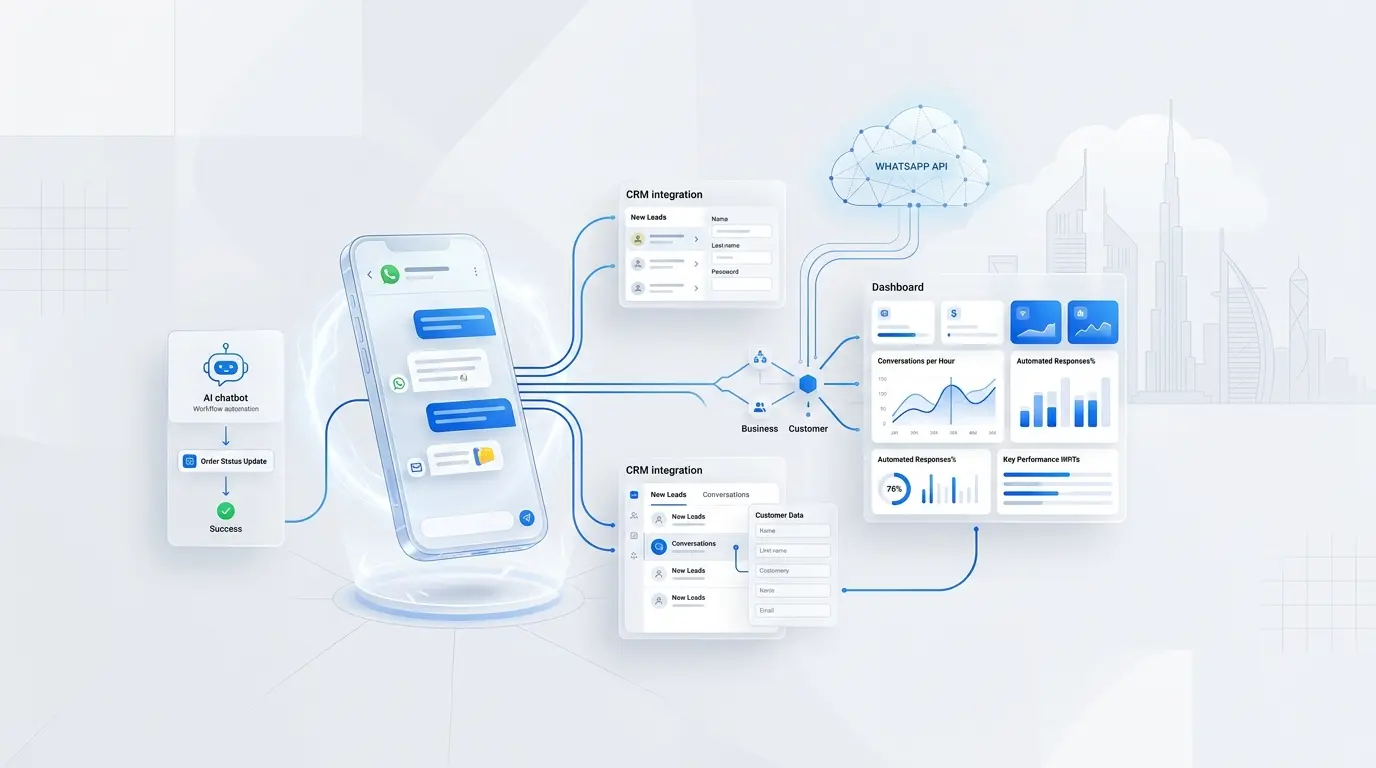
For many UAE businesses, the practical flow is: website booking request, admin notification, WhatsApp confirmation, internal status update, reminder, and follow-up after the appointment. This can connect to a CRM, a custom dashboard, Google Calendar, payment tools, email, or reporting.
The key is to keep one source of truth. If booking details are split between WhatsApp chats, spreadsheets, email, and memory, the business cannot measure performance or manage handovers. A custom web development approach can bring these steps into a structured flow without forcing the team into a generic workflow that does not match how they sell.
Payments, deposits, and no-show reduction
Some appointments should be free to book. Others should require a deposit, prepayment, or card capture to reduce no-shows. The decision depends on service value, demand, cancellation risk, and customer expectations.
Deposits work well when the appointment blocks a valuable resource, such as a specialist, room, trainer, vehicle, or event slot. They may be unnecessary for a simple discovery call. If payments are part of the flow, the system should clearly explain what the payment covers, cancellation rules, refund conditions, and what happens after payment.
The technical side can include payment gateway integration, invoice references, booking status changes after payment, and automated confirmation messages. The business side is equally important: rules must be clear before they are coded.
Reporting and SEO value
A booking system should also help the business understand demand. Useful reports may include booking source, service type, branch, staff member, confirmed appointments, cancelled appointments, no-shows, conversion rate from enquiry to booking, and revenue where payment is involved.
This data helps managers decide what to promote, where capacity is limited, and which services generate the best leads. It also supports marketing. If your SEO and performance strategy brings visitors to service pages, the booking dashboard should show whether those visitors actually become enquiries or confirmed appointments.
Without reporting, the business may have more bookings but still not know which channel, service, or page is working.
Common mistakes to avoid
The most common mistake is copying a generic calendar without mapping the real workflow. Another mistake is asking for too much information before the customer has committed. Some businesses also build an app when a website booking flow would have solved the problem faster.
Avoid these mistakes:
- Building the admin dashboard as an afterthought
- Ignoring mobile usability
- Forgetting Arabic or RTL requirements when the audience needs it
- Treating WhatsApp as a replacement for structured booking data
- Letting customers book unavailable slots
- Creating unclear cancellation or deposit rules
- Sending notifications that staff ignore
- Failing to track source, status, and follow-up
- Overbuilding before the first version is validated
A booking system works only when customers can complete it easily and staff trust it enough to use it every day.
A practical build plan
A good first phase usually starts with discovery. Define appointment types, user roles, branch and staff rules, booking statuses, notification needs, payment requirements, and reporting. Then design the customer booking journey and the admin workflow together, not separately.
The MVP can include service selection, date and time request, customer details, admin dashboard, booking status, email or WhatsApp-ready notifications, and basic analytics. Later phases can add staff calendars, deposits, customer accounts, recurring bookings, CRM integration, automated reminders, and advanced reports.
This staged approach keeps the system useful from launch while leaving room for growth.
How NxFold approaches booking systems
At NxFold Technologies LLC, we design booking systems around the business workflow first. The goal is not to add a calendar for the sake of it, but to create a clear journey from visitor interest to confirmed appointment and internal follow-up.
Depending on the project, that may mean a booking section inside a conversion-focused website, a custom web portal, a dashboard for staff, or a mobile app for repeat customers. We also consider bilingual UX, WhatsApp workflows, SEO, performance, admin roles, and the reporting needed to manage the business properly.
If your current website is not converting visitors into enquiries, you can also start with a lighter audit using the NxFold website auditor before deciding whether you need a full booking platform.
Final checklist before you build
Before starting appointment booking system development in Dubai, answer these questions:
- What services can customers book?
- Are bookings instant, requested, or admin-approved?
- Who controls availability?
- Are there staff, room, branch, or resource limits?
- Do you need deposits or online payments?
- Should the flow be English, Arabic, or bilingual?
- What notifications should customers and staff receive?
- Where should the data live after the booking?
- What reports does management need?
- Is the first version a website flow, web app, or mobile app?
Clear answers reduce development risk and make the final product more useful.
A strong booking system should help customers take action faster and help your team manage appointments with less confusion. Start with the workflow, keep the first version focused, and build only the features that support real bookings, follow-up, and growth.
Have a project in mind?
Ideas to put into practice.
Turn what you have learned into a clearer plan for your website or product. Tell us what you want to build.
Start your project