SaaS & Startup Products
8 min read
SaaS MVP Development in Dubai
Scoping a SaaS MVP in the UAE — what to cut, what to build properly first time, realistic cost, and the path to a first paying customer.
By NxFold
Updated 7 Sept 2026
The word MVP has been stretched until it means almost nothing. To one founder it means a landing page with a waitlist; to another it means eighteen months of engineering before anyone sees it. Both get called the same thing in the same funding meeting.
For B2B software sold to UAE businesses, neither is right. This is about what an MVP actually needs to be when your first customer is a company that will run part of its operation on it.
The Short Answer
A consumer MVP can be thin because the user risks nothing by trying it. A B2B MVP cannot, because your first customer is betting a process on you, and "we will add that later" is a reasonable thing for them to refuse.
So the cut is not "less software." It is fewer capabilities, built properly. One workflow that works completely — with real authentication, real data isolation and real billing — beats five half-finished ones.
The test: could a paying customer run this part of their business on it on Monday, without you in the room? If not, it is a prototype rather than an MVP. That is fine, but do not try to sell it.
Build These Properly the First Time
Some things are extremely expensive to retrofit. Build them correctly in v1 even though they are invisible:
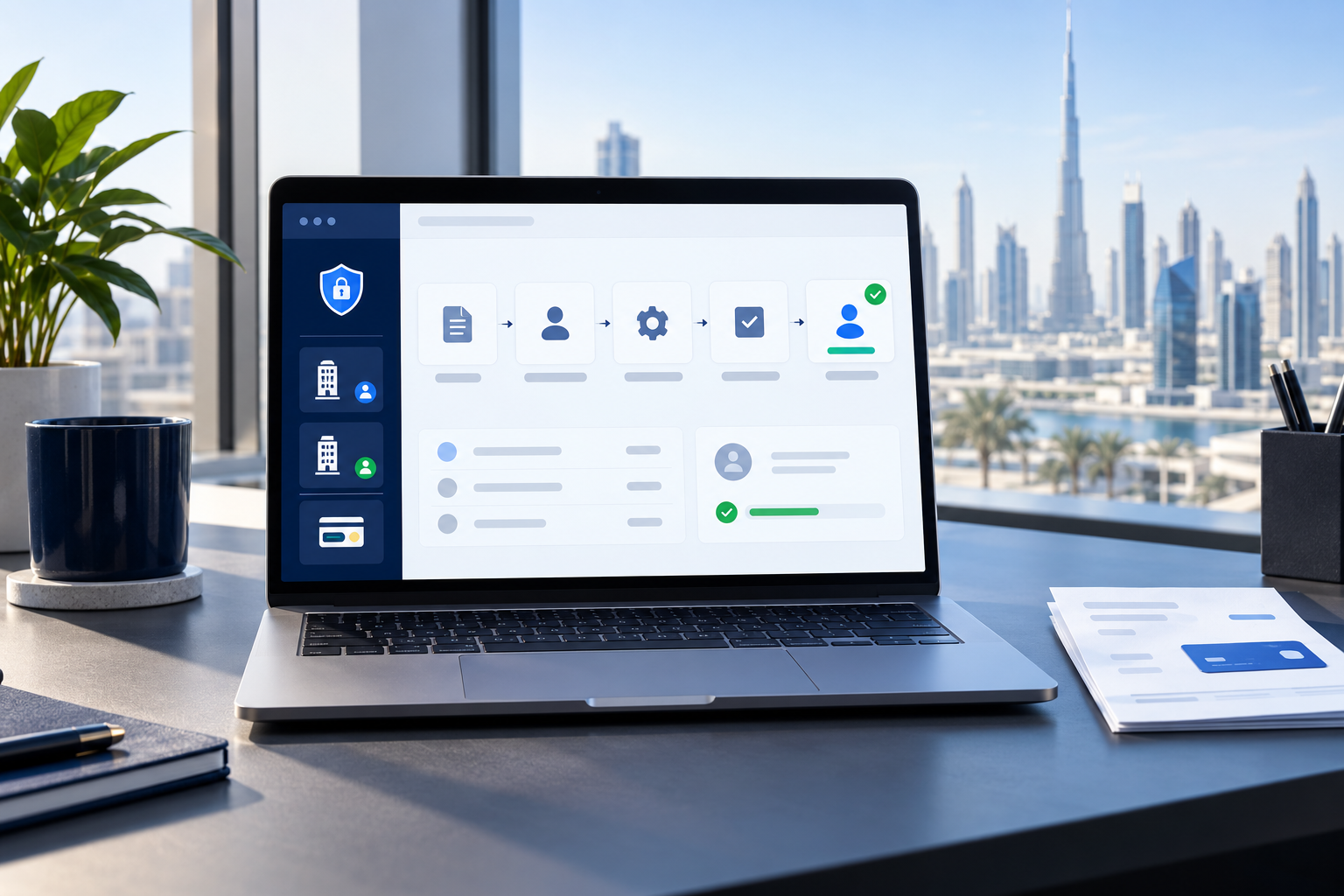
Authentication and permissions. Not just login — roles. Every B2B customer past their first user needs someone who sees everything and someone who does not. Adding roles to a system that assumed one user type touches every query you have written.
Tenant isolation. If you serve multiple companies, the boundary between their data is the most important line in the codebase. Retrofitting it is close to a rewrite, and the failure mode — one customer seeing another's data — ends the company. Multi-tenant SaaS architecture for UAE startups covers the patterns.
An audit trail. Who changed what, when. B2B customers ask for this earlier than founders expect, and reconstructing history you never recorded is impossible.
Billing. Not necessarily self-serve checkout — your first ten customers may well be invoiced manually — but the data model needs to know about plans, seats and periods. Bolting subscription logic onto a system with no concept of an account is painful.
Defer These Deliberately
Self-serve onboarding. For B2B, your first customers should be onboarded by hand. You learn more in those sessions than from any analytics, and automation built before you understand the pattern automates the wrong thing.
Integrations. Every founder has a list. Build the one your first customer will not sign without, and no others. Integrations are individually cheap and collectively enormous, and most go unused.
Mobile apps. A responsive web app is almost always enough for B2B v1. Native comes when there is a genuine field-use case, not because competitors have one.
Analytics dashboards. Customers ask for reporting and then use the CSV export. Ship the export first and let demand tell you which three charts matter.
White-labelling, SSO, custom domains. Enterprise features for customers you do not have yet. They will be specified better once someone is actually asking.
Pricing Before Building
The most common expensive mistake is building first and pricing later, because pricing determines the data model.
Per-seat, per-usage, flat-rate and tiered all imply different things about what you must count, when you must count it and what a customer can self-serve. Deciding after launch means a migration.
More importantly, pricing is how you find out whether the problem is real. A prospect who says the product sounds useful is giving you nothing; a prospect who reacts to a number is telling you where you sit in their priorities. Have the pricing conversation before the build, not after.
For the UAE specifically: VAT applies, invoicing has requirements, and the e-invoicing regime is tightening — see UAE e-invoicing integration in Dubai. Founders routinely discover this at the point of raising the first invoice.
Vertical SaaS Is the Regional Opportunity
The strongest software opportunities in this market are usually not new categories — they are existing categories that international products serve badly here.
The pattern repeats: a generic global product covers 80% of a UAE operator's needs and misses the 20% that is specific to this market. Salik and RTA fine reconciliation for car rental. DET permits and the Tourism Dirham for holiday homes. Bayut and Property Finder lead capture for real estate brokerages. Those gaps are not features an international vendor will build, because the market is too small to justify it — and they are exactly the gaps that make a regional product worth paying for.
We have built on that line more than once. Vara Fleet is a rental operating platform with UAE compliance treated as a first-class module rather than an afterthought. Orseda is a delivery command centre for development teams — projects, tasks and sprints with live progress and analytics on velocity and blockers — built to prove that a data-dense, real-time, multi-user product can be genuinely pleasant to work in. Lnkers went the other way: a consumer-facing product with a drag-and-drop builder, 30+ integrations and click analytics, shipped end to end.
The common thread is that each shipped a complete workflow rather than a broad shallow one.
The Path to a First Paying Customer
Find the customer before you finish the product. Ideally before you start. A design partner who has agreed to pay, in writing, changes every scoping decision for the better.
Charge from the beginning. Free pilots teach you nothing about willingness to pay, and converting a free user to a paying one is harder than starting paid. Discount if you must; do not zero.
Onboard by hand, and watch. The first ten onboardings are the most valuable research you will ever do. Where they hesitate is your roadmap.
Get to the second customer quickly. One customer is a consulting project. The second one tells you which of your first customer's requests were universal and which were theirs alone.
What It Costs and How Long It Takes
A B2B SaaS MVP with authentication, roles, tenant isolation, one complete workflow and a billing model is typically twelve to twenty weeks. Anything advertised as much faster is usually skipping the invisible parts, which you will pay for later at a higher rate.
The budget founders underestimate is the six months after launch — the changes that emerge once real customers use it daily. Plan for continued engineering, not a launch and a handover. For broader ranges, custom software development in Dubai is the current guide.
Common Mistakes
Building broad instead of deep. Five half-workflows convince nobody. One complete one gets signed.
Skipping tenant isolation to move faster. The most expensive shortcut available.
Free pilots. They generate polite feedback and no signal.
Pricing after building. Pricing determines the data model; deciding late means migrating.
Automating onboarding early. You are automating a process you do not yet understand.
Competing with an international product on features. You will lose. Compete on the 20% they do not serve.
Frequently Asked Questions
How much does a B2B SaaS MVP cost and how long does it take? Typically twelve to twenty weeks for authentication, roles, tenant isolation, one complete workflow and a billing model. Faster quotes usually skip the invisible foundations, which get paid for later at a higher rate.
How long to a first paying customer? If you have a design partner lined up before the build, weeks after launch. Without one, the search for a first customer usually takes longer than building the product — which is why finding them first changes everything.
Do we need multi-tenancy on day one? If you will serve more than one company, yes. It is one of the few things genuinely close to impossible to retrofit safely, and the failure mode is catastrophic rather than inconvenient.
Who owns the code? You should, unconditionally, including when an agency builds it. Confirm this in writing before starting. Any arrangement where the builder retains ownership or licenses it back is a problem you will meet at your next funding round.
Can you take over an existing build? Usually, with an audit first. The question is not whether the code is good but whether the foundations — auth, tenancy, data model — support where you are going. Sometimes the honest answer is that continuing costs more than restarting.
Should we charge during the pilot? Yes. A discount is fine, free is not. Free pilots produce encouragement rather than evidence, and moving someone from free to paid is harder than starting them paid.
Web app or mobile app first? Web, for almost all B2B. A responsive web app covers v1; native earns its place when there is a real field-use case, not because a competitor has one.
What makes a regional SaaS defensible? The local specifics an international vendor will not build — Salik reconciliation, DET permits, portal lead capture. The market is too small for them to bother and exactly large enough for you.
The Bottom Line
An MVP is not a smaller version of the product. It is the smallest thing a real customer can pay for and rely on — which for B2B means narrow in scope and complete in depth.
Build the invisible foundations properly, cut capabilities rather than quality, decide pricing before the data model, and find the customer before you finish. Most failed SaaS builds in this market failed at one of those four, and none of them are engineering problems.
If you are scoping a SaaS product for the UAE, get in touch. We have shipped several and will tell you honestly which parts of your scope belong in v2. The build side sits under web app development and the product context under SaaS and startup product development.
Have a project in mind?
Ideas to put into practice.
Turn what you have learned into a clearer plan for your website or product. Tell us what you want to build.
Start your project